
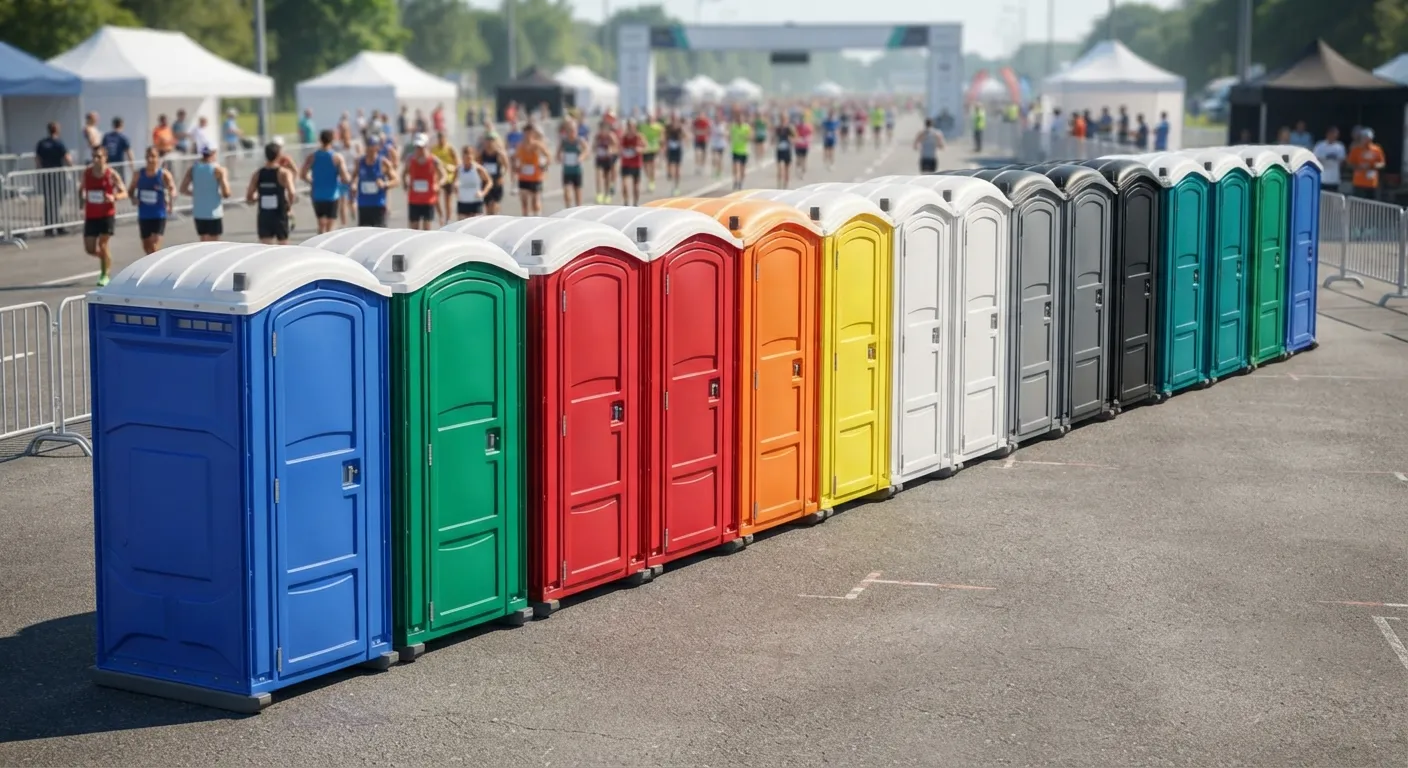
How many restrooms does a race need?
Start with runner count, then split units between the start line, mile markers, and the finish. How Many Porta Potties Do I Need in Boulder, CO walks through the math, but races behave differently than job sites: everyone needs a restroom in the same 30-minute window before the gun goes off, so you cannot rely on the steady-use ratios from OSHA 1926.51(c) that govern construction crews. Those ratios cap out at 1 toilet per 50 workers for large crews, and race organizers in Boulder typically run tighter than that at the start line specifically because of the compressed rush. Aid stations along the course usually need fewer units, spaced by mile marker rather than headcount, since runners pass through instead of queuing at once.
Every cluster needs at least one accessible unit under ADA Standards section 213.2, which requires 5 percent of clustered units to be accessible with a floor of one no matter how small the cluster. A standard unit stands about 92 inches tall and covers roughly 44 by 48 inches of ground, so pack your site map accordingly before you finalize road closures. For races with a hospitality tent or VIP area, a deluxe flushable unit or a small restroom trailer reads better in photos than a straight row of standards.
What does race restroom rental cost in Boulder?
| unit | day | weekend | week |
|---|---|---|---|
| standard | $100-$350 | $125-$400 | $130-$500 |
| ada | $200-$400 | $199-$300 | $185-$240 |
| deluxe | $85-$1200 | - | $150-$290 |
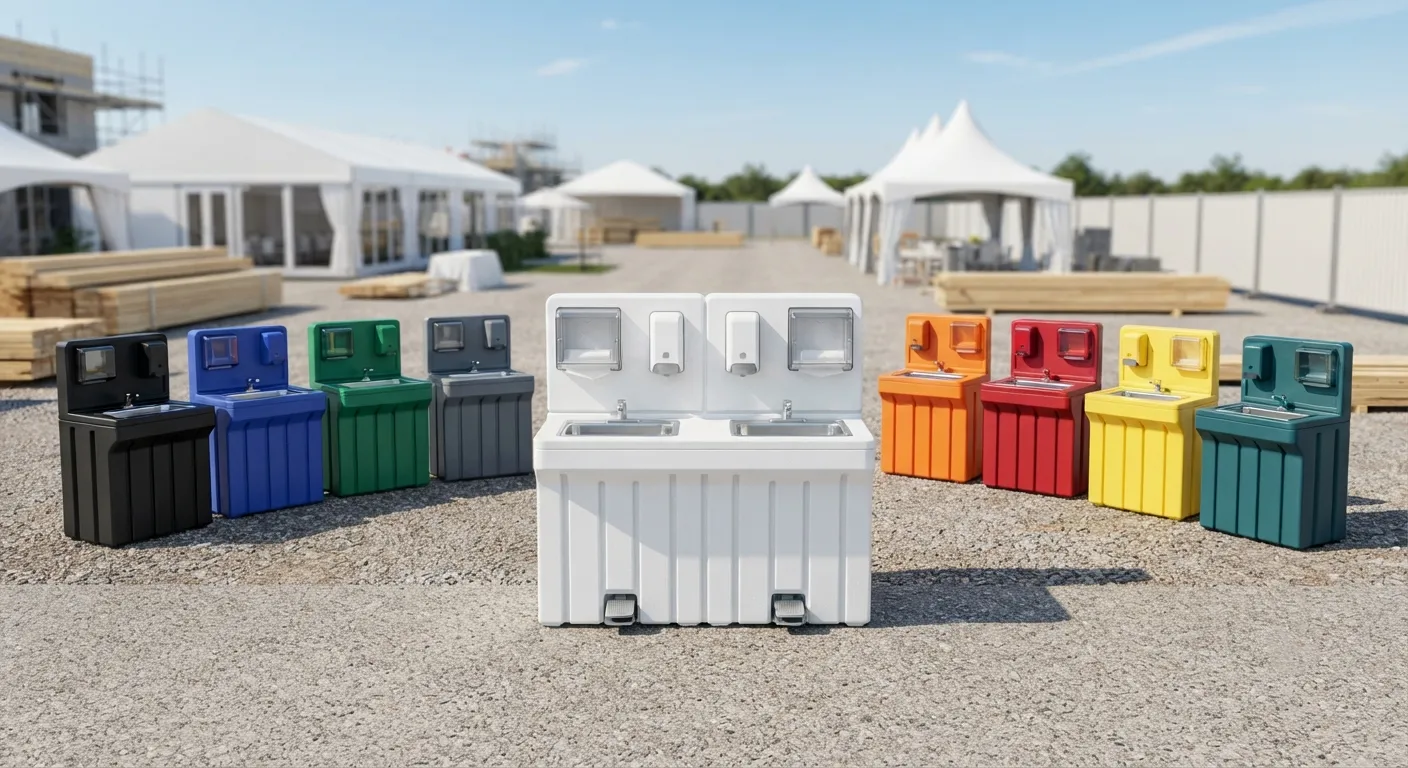
Most single-day races book on the day rate, but a weekend festival with Friday setup and Sunday teardown often lands on the weekend band instead, which runs higher than a single day because it covers two extra service windows. A multi-day stage race spanning a full week should compare against the week column rather than stacking daily rates, since Porta Potty Rental Per Day in Boulder, CO and Porta Potty Rental Cost in Boulder, CO both show the week rate beating seven separate day bookings. Delivery adds a separate line, and large finish-line festivals sometimes need a handwashing station or two near food vendors, priced apart from the toilet count. If your race spans multiple days without teardown, ask about Monthly Porta Potty Rental in Boulder, CO pricing instead, which can undercut a long weekend rate for extended events.
Where should restrooms and equipment go on a race course?
Placement drives everything else on race day. Follow the Porta Potty Placement Guide in Boulder, CO for ground rules: units need a stable, slip-resistant surface under ADA Standards section 302.1, a 36 inch clear path per ADA Standards section 403.5.1, and a 60 inch turning circle in front of any accessible unit under ADA Standards section 304.3.1. Keep units off narrow sidewalks and clear of the timing mats.
If your event runs a light tower or temporary power pole for a pre-dawn start or a finish-line stage, brace it properly before crews or spectators arrive. A temporary power pole needs a firm base and guy-wire or bracket bracing rated for wind gusts; the standard approach to how to brace a temporary power pole is to set the base plate on stable ground, run guy wires to fixed anchors at three points, and check the tension again after each setup shift since race sites see heavy foot traffic bumping equipment loose, all well clear of the runner corridor. Pair it with a light tower for early starts, and route any cabling under matting rather than across the path. If your course crosses city right-of-way, placement there needs confirming with the City of Boulder before delivery day. For crowd control at the start corral or finish chute, a crowd control barrier or temporary fence rental keeps spectators off the course without blocking restroom access. Races drawing from Louisville, 9.4 miles southeast, or Lafayette, 10.1 miles east, should build extra buffer into delivery scheduling, since trucks share the same access roads as runner shuttles on race morning.
Races staged near Valmont, 3.5 miles east of central Boulder, or pulling volunteers from Erie, 13.9 miles east, should also plan trash removal alongside restrooms. A roll-off dumpster at the finish festival keeps cup litter and food waste off the course footage. See Event Restroom Rental in Boulder, CO for the broader event playbook this page draws from.
How far in advance should I book race restrooms?
Book as soon as your course map and road closures are approved. Race weekends compete with weddings and festivals for the same standard units, and the weekend rate reflects that demand. Confirm headcount two weeks out so your provider can adjust the split between start, course, and finish.
Do I need an accessible unit for a small local race?
Yes. ADA Standards section 213.2 requires at least one accessible unit per cluster, even for a race under 100 runners. Place it on a firm surface with a 36 inch approach path and keep the door swing clear for a wheelchair to turn.
Can restroom trailers work for a marathon finish line?
Yes, especially for finish festivals with sponsors or VIP tents. A 2 stall or 4 stall restroom trailer handles overflow better than standards alone and gives runners a nicer post-race experience. Book early since trailer weekend demand runs high.
What happens if my race runs long and needs same-day extra units?
Call for emergency porta potty rental in Boulder, CO. Providers with trucks already staged nearby, including toward Broomfield, 15.5 miles southeast, can often add units same-day if the course allows truck access.
Do aid stations along the course need full restroom setups?
No. Aid stations typically need one or two standard units rather than a full cluster, since runners pass through rather than gather. Space them by mile marker and confirm each spot has truck access for setup and pickup.
Next step
Get a delivery date
Tell us the address, the dates and the headcount. We size the order and confirm the route.