
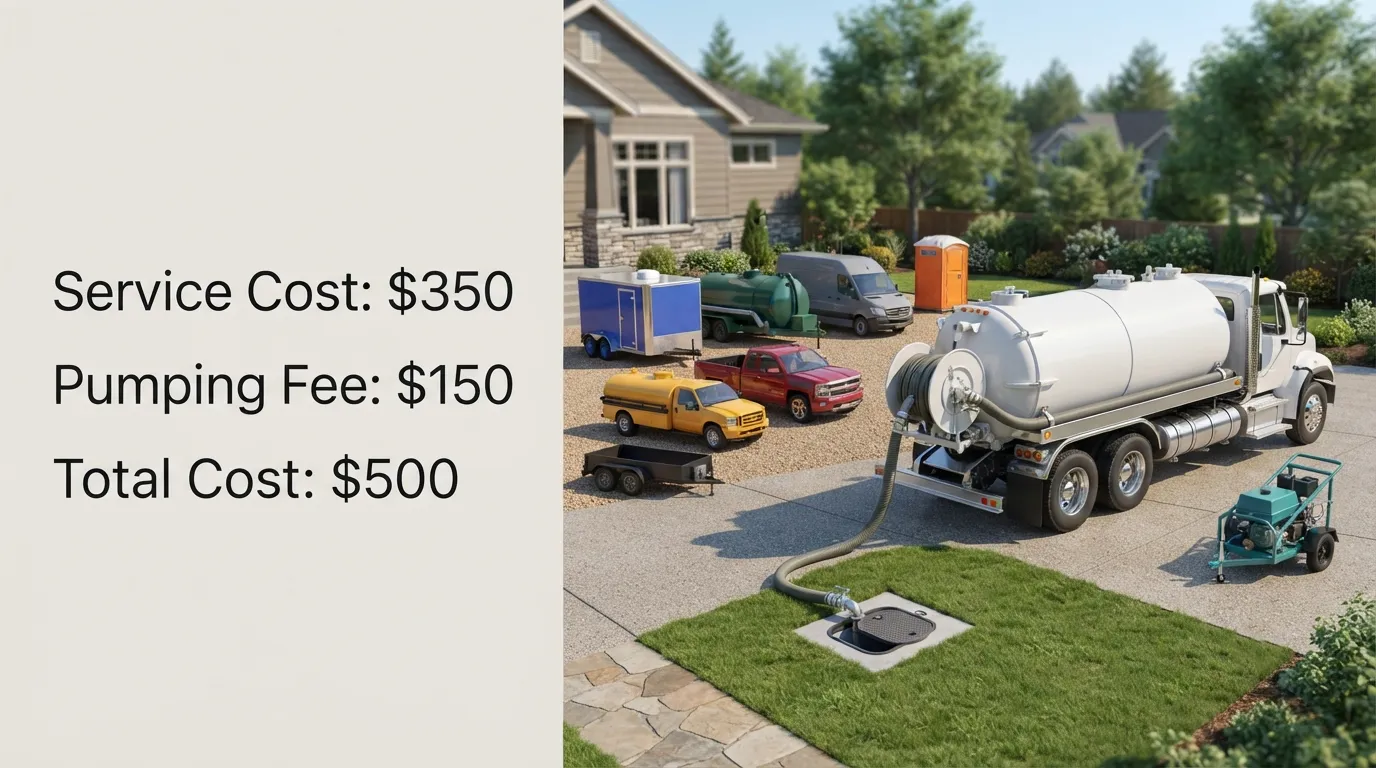
How Much Does Septic Tank Pumping Cost?
Most homeowners in Boulder pay somewhere between $150 and $300 for a standard pumping visit, based on our day-rate service band. The final number depends on tank size, how deep the truck has to reach, and whether the lid needs digging out or already has a riser installed. Weekend service costs more, and crews handling both septic work and dumpster rental cost on the same property should plan for that premium. Expect $50 to $150 on top of the base call if you need someone out on a Saturday or Sunday. Boulder Porta Pros prices every septic pumping job by tank size and access, not a flat number pulled out of the air. If your tank has not been serviced in a while and the truck shows up to find compacted sludge or a buried lid, that adds time and sometimes cost. Ask about septic pumping service pricing specifics when you call, and check septic tank pumping cost details against your own tank's history before booking. A tank that has gone unpumped for six or seven years will cost more to clear than one on a normal cycle, similar to how porta potty rental per day pricing climbs once a job runs long and unplanned.
Why Does Septic Tank Cleaning Price Vary So Much?
Access is the biggest swing factor. A tank buried under three feet of soil with no riser takes longer to open than one with a visible lid, and that extra labor shows up on the invoice. Tank size matters too. A typical residential septic tank is pumped every 3 to 5 years, and that interval is driven by tank size and household size, so a bigger household hits that ceiling faster. Distance from Boulder proper can factor in as well; a property out toward Valmont, 3.5 miles east of the city, or further out near Louisville, 9.4 miles southeast, may carry a different drive time than a job inside town. If your property backs up to a business kitchen, a grease interceptor is a separate system serviced when fats, oils, grease and solids reach 25 percent of the liquid depth, and that is a different job from a household tank. See grease trap pumping for that side of things, and check monthly porta potty rental if the same site needs restrooms on a longer term. Homeowners comparing septic tank cleaning prices should also check septic tank pumping cost for the full band before assuming one flat number applies everywhere.
What Is a 1,000 Gallon Septic Tank Pumping Cost?
A 1,000 gallon tank is the most common residential size in Boulder, and it generally lands in the $150 to $300 day-rate band along with everything else that size. Larger commercial tanks or tanks with restricted access push toward the top of that range. If your tank has never been mapped or you are not sure of its size, that is worth confirming before you book, since guessing at capacity is how quotes go sideways. Boulder Porta Pros can walk the property and check the visible signs first, the same way a porta potty placement guide helps plan unit locations before delivery. If your tank is showing septic tank warning signs like slow drains or soggy patches near the leach field, get it pumped before it backs up rather than after. Renovation projects sometimes need a stopgap; a holding tank rental covers that gap while the system is down, and construction crews on the same property often need a portable toilet rental running alongside it during the work, and some add a standard porta potty rental unit near the work zone for daily use.
When Should I Schedule Septic Tank Pumping?
Schedule it on the normal 3 to 5 year cycle rather than waiting for a backup, since reactive service after a failure costs more in cleanup than a routine pump ever would. If it has been longer than five years since the last visit, or you have never had it checked, that is worth moving up the list. Households that added people, put in a garbage disposal, or started running more laundry loads should also shorten the interval; heavier daily use fills a tank faster than the average schedule assumes. For guidance on setting your own interval, how often to pump a septic tank breaks down the factors in more detail. If your system is already failing, emergency septic service covers same-day response rather than a scheduled slot, much like emergency porta potty rental covers a sudden restroom shortage on site. Boulder's older neighborhoods sometimes have tanks installed decades ago with no riser and no recent service record, so a first-time inspection before pumping saves a surprise mid-job, the same logic behind using a porta potty rental checklist before a big event.

Are There Other Costs Beyond the Pumping Itself?
Sometimes, yes. If the tank has never had a riser installed, digging to the lid adds labor time that shows up in the final price. Weekend and after-hours calls run higher than a weekday appointment, and a tank that is severely overdue may need extra time to break up compacted solids before the truck can pump it clean. None of that changes the underlying service, just the time it takes. For side-by-side comparison of pumping against related services, septic tank cleaning covers what a full service visit includes beyond just removing liquid waste, and homeowners weighing a full remodel might also look at home renovation porta potty options for the crew. Properties near Lafayette, 10.1 miles east of Boulder, or Erie, 13.9 miles east, fall within normal service range and should not see a meaningful difference in the base price. Construction sites running a septic system alongside job trailers often bundle service with construction site services scheduling to keep both on the same visit, and larger sites sometimes add a storage container rental or a mobile office trailer rental to the same delivery.
How much does septic tank pumping cost in Boulder?
Most jobs run $150 to $300 for a standard day-rate visit, based on tank size and access. Weekend calls cost more, typically $50 to $150 above the base rate. Boulder Porta Pros confirms the number after checking your tank in person.
How often should a 1,000 gallon tank be pumped?
Every 3 to 5 years is the typical interval, driven by tank size and household size. Larger households or heavier water use shorten that window. If you are unsure of your last service date, book an inspection before assuming it is fine.
Does tank access change the price?
Yes. A buried lid with no riser takes longer to reach than an exposed one, and that extra digging time adds to the job. Installing a riser after the first pump can lower cost on every visit after.
What if my tank has not been pumped in years?
Overdue tanks often have compacted solids that take longer to break up and remove. This can push the job toward the higher end of the price range. Book soon rather than waiting for a backup, since failures cost more to fix.
Is emergency septic service more expensive?
Yes, weekend and urgent calls run higher than a scheduled weekday visit. Emergency response covers active backups or failures where waiting is not an option. Ask Boulder Porta Pros about same-day availability when you call.
Next step
Get a delivery date
Tell us the address, the dates and the headcount. We size the order and confirm the route.